Medigrace Hospital and Inaaya IVF are among the leading hospitals in Central India for infertility, laparoscopy, and women’s care. A trusted IVF centre in Nagpur, specializing in infertility treatment, laparoscopy, OB/GYN, and PCOS/PCOD treatment.
Laparoscopy for infertility is an advanced treatment used to find and treat the unexplained cause of infertility. This includes endometriosis, fallopian tube blockage. The process is done in 30 minutes or more in some cases. In this treatment, a high-definition camera is used to diagnose or treat fertility issues. Because this procedure gives insights that no other X-ray or ultrasound can give. Laparoscopy increases the chances of pregnancy within months.
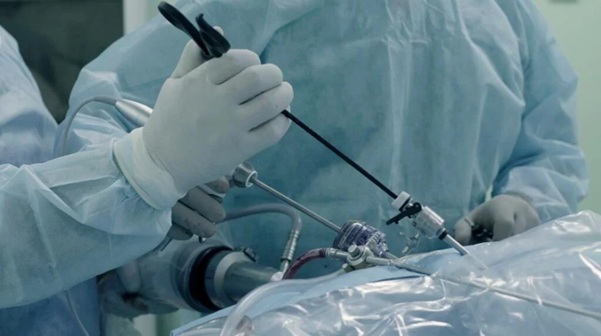
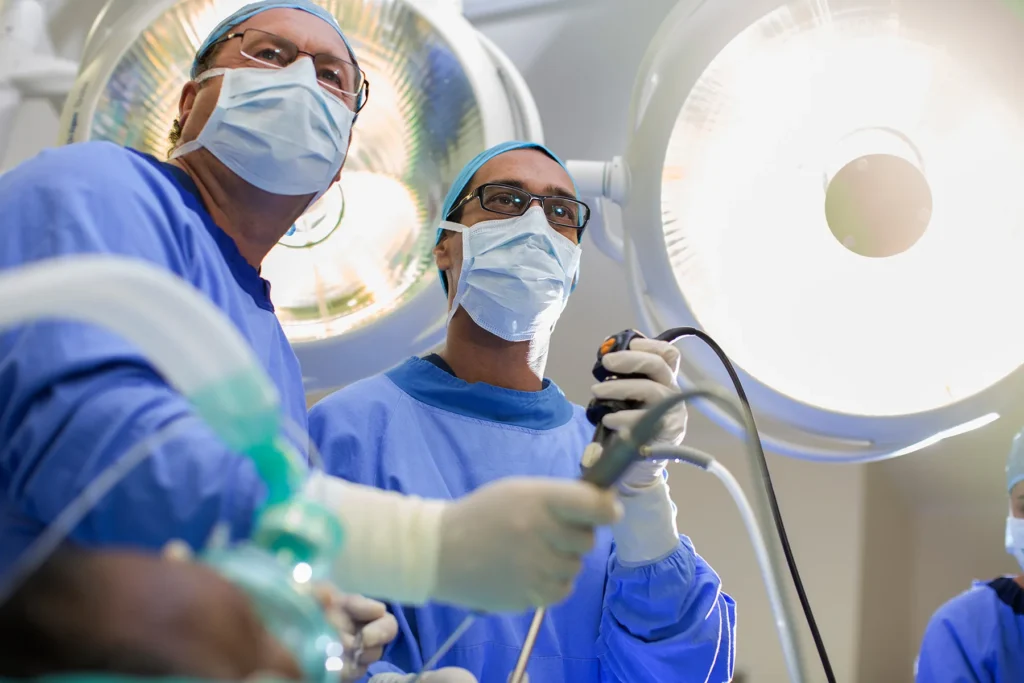
Laparoscopy is one of the most popular treatments and diagnostic procedures for infertility. The process is carried out by doing a small incision near the navel through which a thin tube with a camera, called a laparoscope, is inserted. It is a minimally invasive procedure in which the woman is given anesthesia that makes laparoscopy a painless procedure. The whole procedure is normally done in an hour, but when laparoscopy is used to treat endometriosis or any other advanced surgery, it takes more than 1 or 2 hours.
Laparoscopy for infertility is used to see inside the abdomen. This laparoscope with a camera shows the uterus, fallopian tubes, ovaries, peritoneum, and pelvic cavity. Sometimes chromopertubation (dye test) is done during laparoscopy to check tubal patency.
When is laparoscopy done for infertility?
At the best IVF centre in Nagpur, Mediagrace Hospital, the gynaecologist advises laparoscopy for infertility only when blood work, ultrasounds, and semen analysis fail to explain why the couple is not able to conceive.
Here are some other reasons doctors consider before suggesting laparoscopy for infertility to the patients:
The woman is suffering from polycystic ovarian syndrome and fails to respond to the medications.
Women have suffered from pelvic inflammatory disease or previous abdominal surgeries that have affected fertility.
If a woman has painful periods, pelvic pain, or painful intercourse, the doctor suspects endometriosis.
If fibroids are blocking the fallopian tubes.
These were the few reasons why doctors suggest laparoscopy for infertility, because it gives them an inside view of the pelvic area, which helps the doctor to understand exactly where the problem is.
Laparoscopy for infertility success rate
Top studies show an increase in pregnancy rates by 30–60% within 6–12 months, depending on the condition treated after laparoscopy. The percentage can increase and decrease based on the problems underlying health issues in couples.
Factors that affect the laparoscopy for infertility success rate:
Cause of Infertility:
Endometriosis, ovarian cysts, and tubal blockage decrease the chances of fertility. But after laparoscopy, conception is possible when the cysts are removed, blockages are successfully treated, and endometriosis is removed.
Severity of underlying condition:
If the underlying condition, like the fallopian tubes, is severe, it cannot be treated. Then, it cannot help at its best. Laparoscopy works best when the underlying condition is mild or moderate, which can be treated. For example, mild endometriosis has much higher success rates than stage IV.
Patient’s Health:
Factors like age and overall health condition. An underlying health issue or lifestyle improves or decreases the success rate of laparoscopy for infertility. For example, it works best with younger women because they have better egg quality and higher conception rates. Thus, the treatment itself also requires maintaining a good lifestyle.
Conceive Timing:
Mostly, the increase in pregnancy rates is seen in women trying to conceive within 3 to 6 months or a maximum of 1 year. If a natural pregnancy still doesn’t happen, they can try for IVF because the chances of conceiving through it are still high.
Gynecologist Expertise:
An experienced gynecologist helps increase the success rate of laparoscopy for infertility by ensuring you receive an accurate diagnosis with minimal complications and offering you the best protocol.
Conclusion
Laparoscopy for infertility is a treatment as well as a diagnostic procedure. With this advanced technology, unexplained infertility problems like endometriosis, fallopian tube blockage, and ovarian cysts are diagnosed and treated with the assurance of pregnancy. However, factors like age, severity of condition, patient health, and the gynecologist’s expertise will always affect the success rate. To ensure maximum success, connect with the best IVF centre in Nagpur, the Medigrace hospital and start your journey to parenthood.
The best gynecologist in Nagpur at the Medigrace hospital recommends waiting for at least 2 months and a maximum of 6 months before trying to conceive after a laparoscopy.
Laparoscopy and IVF are two different procedures. Laparoscopy is used to identify the unexplained reason for infertility, whilst IVF is used to aid in conception.