Medigrace Hospital and Inaaya IVF are among the leading hospitals in Central India for infertility, laparoscopy, and women’s care. A trusted IVF centre in Nagpur, specializing in infertility treatment, laparoscopy, OB/GYN, and PCOS/PCOD treatment.
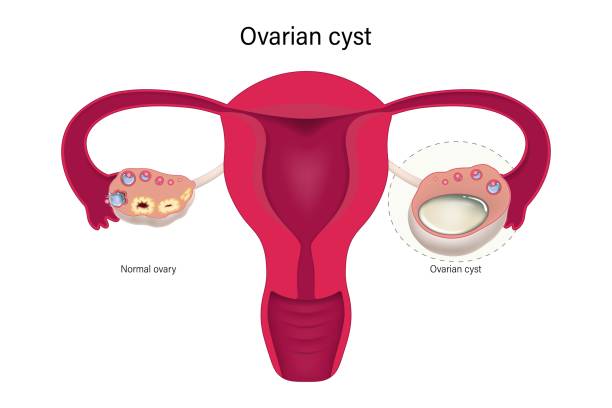
An ovarian cyst larger than 7 to 10 cm is considered dangerous. The larger the cyst, the more it presses on organs, causing pain, internal bleeding, and sometimes cutting off the blood supply. Ovarian cysts smaller than five centimetres are usually not dangerous because they are monitored and often resolve naturally. However, when an ovarian cyst grows more than ten centimetres, it becomes necessary to remove it, and it can only be removed through surgery. So, what size of ovarian cyst is dangerous, 10 cm?
According to several studies, an ovarian cyst larger than ten cm has a higher chance of being neoplastic, meaning tumour-like, rather than functional. Rapid growth of the cyst can also indicate it may be cancerous. Women at higher risk of ovarian cysts include postmenopausal women, women with a family history of ovarian or breast cancer, and women suffering from endometriosis or PCOS. If any of these apply to you, it is important to consult the best gynaecologist in Nagpurat Medigrace Hospital, one of the best IVF centres in Nagpur.
What are the early warning signs of ovarian cysts?
Pain or pressure in your pelvic area, heavy bloating, irregular periods, or pain during intercourse are some of the early warning signs that an ovarian cyst is growing. Now that you know what size of ovarian cyst is dangerous, here are some of the warning signs of an ovarian cyst that need immediate attention from a doctor.
Pelvic Pain or Pressure
If there is sharp pain in your lower belly, usually on one side, and this pain comes and goes or worsens during your periods or after exercise, it can be a symptom of an ovarian cyst.
Bloating or Fullness
If you are feeling heaviness, even after this, it may be due to the pressure of a larger cyst on nearby organs.
Irregular Periods
Hormonal cysts affect your hormones, like estrogen and progesterone, which disturb the menstrual cycle, leading to missed, delayed, or heavier periods than usual.
Pain During Intercourse
Pain or discomfort during or after sex, which is known as dyspareunia, is also another warning sign of an ovarian cyst. It can indicate the cyst’s size or location.
Frequent Urination or Constipation
A growing ovarian cyst can press against the bladder or intestines, leading to frequent urination or constipation. In such cases, many women start wondering what size of ovarian cyst is dangerous, since larger cysts are more likely to cause these pressure-related symptoms.
Lower Back Pain
When the cyst is rapidly growing, which is dangerous, it can also cause lower back pain due to its pressure on nearby organs. Some women feel an achy pain in their lower back because of this pressure from the cyst.
Nausea or Breast Tenderness
These happen due to hormonal changes caused by the cyst. Women may experience many symptoms similar to early pregnancy.
Seek medical help immediately if you experience symptoms like sharp pelvic pain, vomiting, fever, dizziness, or rapid breathing. Smaller ovarian cysts, less than 5 cm, usually do not cause such problems and often resolve naturally. However, larger cysts, especially those over 7 cm, need careful monitoring and treatment if they are growing or causing discomfort. Many women ask what size ovarian cyst is dangerous, and cysts above this size are typically considered high-risk and require medical attention.
Ovarian cyst treatment
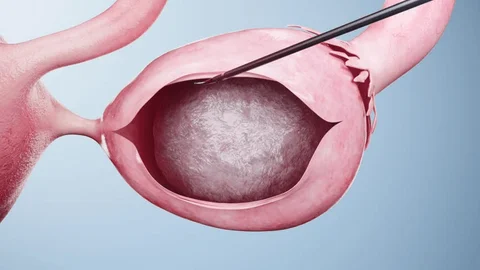
Ovarian cyst treatment depends on the type, size, and symptoms of the cyst. If the cyst is less than 5 cm and not causing any trouble, doctors usually suggest medications or simply monitor it. But if it grows or the ovarian cyst causes pain, treatments like pain relievers or hormonal pills may be advised. Many ovarian cysts are functional, meaning they form naturally during the menstrual cycle and disappear on their own within a few weeks. However, persistent or painful cysts may require surgery. Patients often ask what size of ovarian cyst is dangerous, and typically, cysts larger than 7–10 cm are considered risky and need medical attention. At Medigrace Hospital, the best IVF centre in Nagpur, doctors recommend 3D Laparoscopy (Keyhole Surgery) as it’s a minimally invasive procedure that removes small or benign cysts while keeping the ovary safe.
Conclusion
An ovarian cyst develops inside the ovary and is filled with fluid. Most ovarian cysts are non-cancerous and form naturally during the menstrual cycle and also resolve naturally. However, in some cases, the cyst grows on its own, leading to pelvic pain, bloating, irregular periods, or pressure on nearby organs. Many women often confuse what size of ovarian cyst is dangerous. It is 10 cm, while they can vary in size from a few millimetres to more than 10 centimetres as well. In such cases, it is better to consult the best gynaecologist in Nagpur for advanced treatment.
The size of an ovarian cyst alone doesn’t tell if it’s cancer or not, but if the cyst is large, then 10cm, has irregular borders or thick walls, rapidly growing, then it can be cancerous.